
Number 23 Tracing Worksheet For Kids
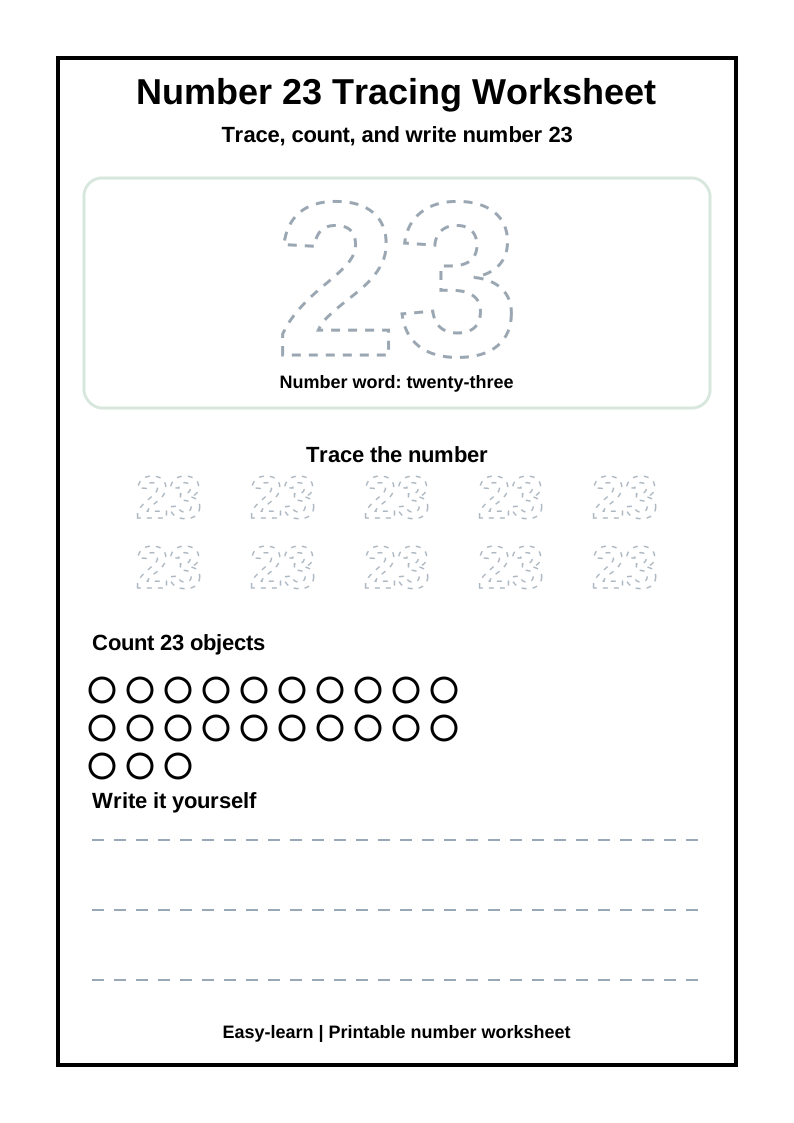
Help children learn how to write number 23 with this printable tracing worksheet. This page includes number recognition, counting practice, and early handwriting support.
What Kids Will Learn
- Number 23 recognition
- How to trace and write number 23
- Counting up to 23
- Pencil control and early handwriting practice
Counting Activity
Ask your child to count 23 objects on the worksheet, say the number word "twenty-three" aloud, then trace the number before writing it independently on the practice lines.
Understanding 23: Two Tens and Three Ones
The number 23 is made from 20 and 3. The digit 2 tells us there are two groups of ten, and the digit 3 tells us there are three more ones. Children can see this by arranging 20 counters into two rows of ten, then placing three extra counters beside them.
Count the first row from 1 to 10, the second row from 11 to 20, and then count on: 21, 22, 23. This helps children understand that 23 is one more than 22 and one less than 24, rather than learning the written shape without understanding its quantity.
Make 23 With Everyday Objects
Choose safe objects that are easy for your child to move, such as building blocks, crayons or large counters. An adult should supervise the activity, especially when small counting objects are used.
- Make one group of 10 objects.
- Make a second group of 10 objects.
- Add 3 more objects beside the two groups.
- Count all the objects aloud and check that the total is 23.
- Remove one object to make 22, then add two objects to make 24.
For an extra challenge, mix the objects and ask the child to organise them into groups again. Grouping makes a larger quantity easier to count accurately.
How to Write Number 23 Clearly
Write the digit 2 first and the digit 3 immediately after it. For 2, begin near the top, curve around, move diagonally down and finish with a short line across the bottom. For 3, begin near the top and make two rounded curves that open towards the left.
Remind children that the 2 comes before the 3. If the digits are reversed, they make 32, which is a different number. Encourage slow tracing at first, with both digits resting on the same writing line and a small, even space between them.