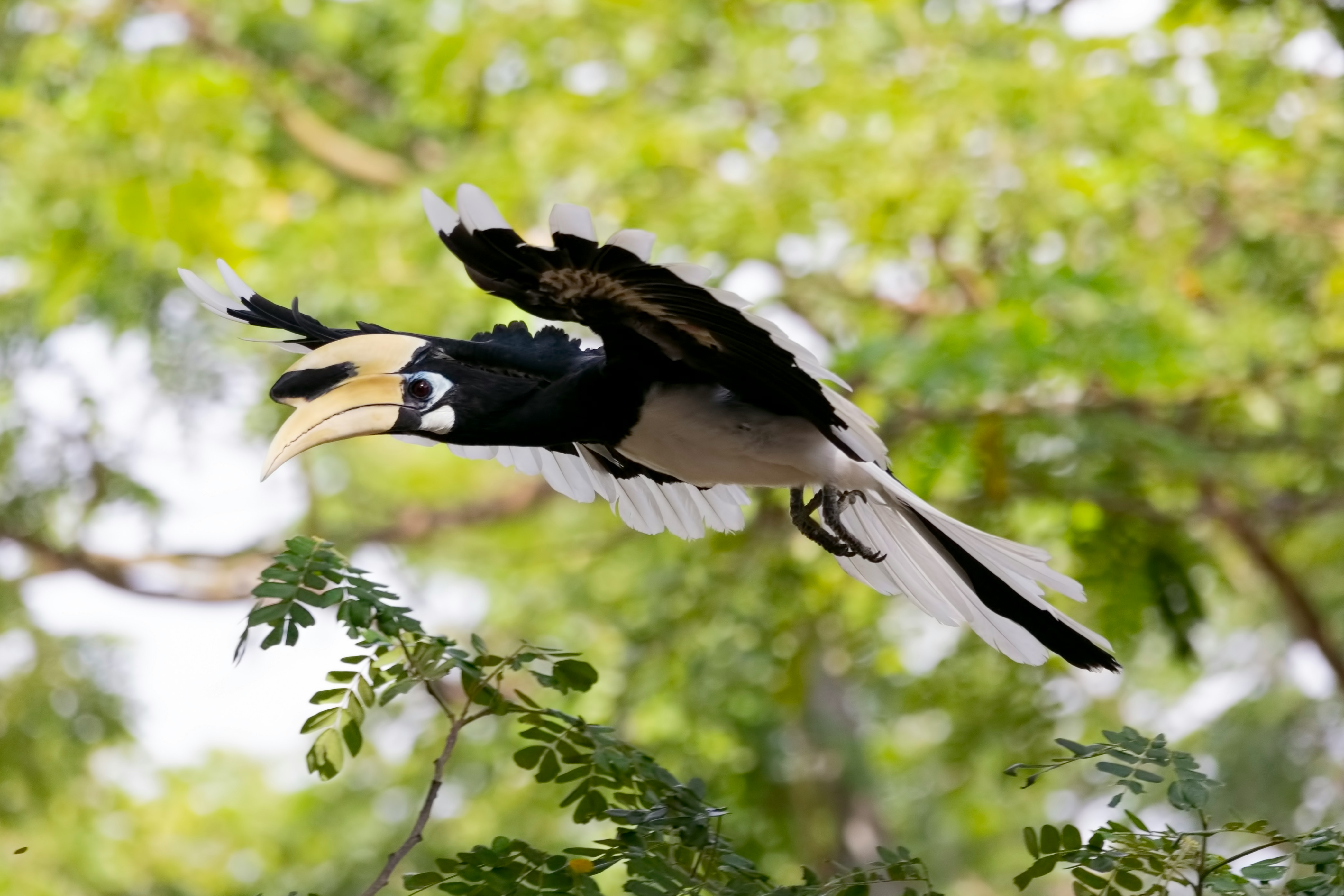
Hornbill

Hornbill with a large curved beak

A hornbill is a forest bird with a large curved beak. Many hornbills also have a raised shape on top of the beak called a casque.

Fun Facts About Hornbills

  • Hornbills use large beaks to pick up fruit and small animals.
  • Some hornbills help spread seeds through forests.
  • The casque can make the beak look even bigger.

Back to birds

What Is a Hornbill?

The word hornbill is useful for early science and reading because children can connect the picture, sound, habitat, food, and body parts together.

Say the bird name aloud, look carefully at the picture, and describe what you notice.

Habitat, Food, and Movement

  • Habitat: forests and wooded areas
  • Food: fruit, insects, and small animals
  • Movement: flies between trees and perches on branches

Practice Sentence

Easy: I see a hornbill.

Medium: The hornbill has a large beak.

Challenge: A hornbill can help forests by spreading seeds after eating fruit.

Ask the child to read the sentence, point to the bird picture, and say the bird name clearly.

Activity Idea

Compare pictures of bird beaks and ask which one could reach fruit on a branch.

  1. Look carefully at the hornbill picture.
  2. Say the bird name aloud.
  3. Point to the beak, wings, legs, and feathers if you can see them.
  4. Describe where the bird lives and how it moves.

This activity supports vocabulary, observation, movement, and simple speaking practice.
Hornbill Body Parts

  • Beak: reaches and picks up food
  • Casque: a raised part on some hornbill beaks
  • Wings: carry the hornbill through the forest

Look and Think

  • What is special about the hornbill beak?
  • Where does a hornbill live?
  • How can a fruit-eating bird help a forest?

Learning Safely

  • Watch wild birds quietly and give them space.
  • Do not touch nests, eggs, chicks, or wild birds.
  • Ask an adult before feeding birds, because different birds need different food.

Compare and Think

  • Hornbill and woodpecker: Both have strong beaks, but hornbills often use theirs for fruit.
  • Hornbill and kingfisher: Both have noticeable beaks, but they catch different foods.

Hornbill Words to Learn

  • Casque: a raised shape on top of some hornbill beaks
  • Forest: a large area with many trees
  • Spread seeds: move seeds to new places where plants may grow

Check understanding

Quick Questions

Read each question, say your answer aloud, then check the teacher note.

Q1

Where does a hornbill live?

Answer

A hornbill can live in forests and wooded areas.

Q2

What does a hornbill eat?

Answer

A hornbill eats fruit, insects, and small animals.

Q3

Which body part is important for this bird?

Answer

An important feature is its large curved beak.

Q4

Use the word hornbill in a sentence.

Answer

Accept any clear sentence that uses the word hornbill.

Back to bird names Printable worksheets